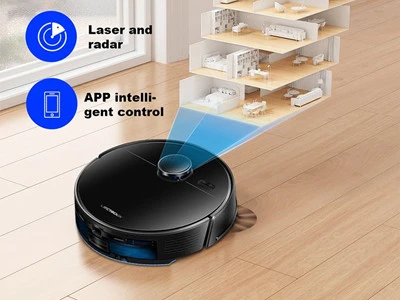
Autonomy: Robotic vacuum cleaners are highly autonomous, requiring no human intervention to complete cleaning tasks independently. They can autonomously navigate around obstacles, avoid falling or colliding, and precisely locate the cleaning area. Intelligent robotic vacuum cleaners can also use technologies such as LiDAR and visual sensors to create maps of the indoor environment and plan cleaning routes, achieving highly efficient cleaning.
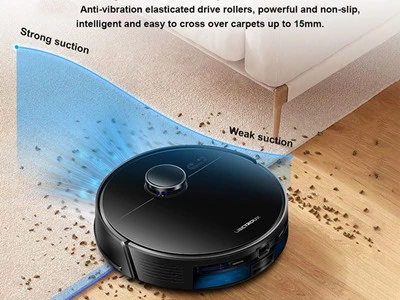
Efficiency: Compared to manual cleaning, robotic vacuum cleaners offer significantly higher cleaning efficiency. Traditional cleaning methods require considerable time and effort, while robotic vacuum cleaners can automatically complete cleaning tasks in a short time. Furthermore, the cleaning results are more precise. They can meticulously remove dust, hair, debris, and pet hair from the floor, ensuring a clean floor.
Energy Saving and Environmental Protection: Robotic vacuum cleaners are powered by rechargeable batteries, eliminating the need for fuel or batteries. This results in low energy consumption and excellent energy-saving performance. Furthermore, because robotic vacuum cleaners autonomously complete cleaning tasks, they reduce air pollution caused by manual cleaning, effectively controlling environmental pollution and energy waste.
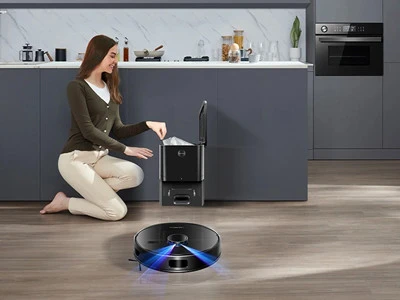
Convenience and Effortlessness: Robotic vacuum cleaners operate silently, allowing them to clean when people are not home, reducing the burden on homeowners. Additionally, robotic vacuum cleaners can be programmed with cleaning times and modes, making home cleaning more intelligent and automated, saving time and effort and freeing up more leisure time.