As an intelligent cleaning device, a window cleaning robot integrates technologies from multiple fields, including mechanics, electronics, sensors, and algorithm control, aiming to achieve efficient and safe cleaning of glass surfaces.
Drive System and Motion Mechanism
The movement capability of a window cleaning robot relies on a sophisticated drive system, typically driven by a DC motor or stepper motor, with a gearbox for torque amplification and speed adjustment. The motion mechanism often employs a tracked or wheeled design:
Tracked: Movement is achieved through the friction between rubber tracks and the glass surface. Suitable for vertical or inclined surfaces, but with lower steering flexibility.
Wheeled: Utilizes dual-wheel or four-wheel drive, combined with omnidirectional wheels for flexible steering. Commonly found in household models, but requires vacuum adsorption or magnetic attraction technology to ensure proper contact with the glass.
In addition, some high-end models employ a robotic arm structure, using multi-axis linkage to achieve complex path planning, such as mimicking the "Z"-shaped or spiral trajectory of manual wiping, improving cleaning coverage.
Adsorption and Safety System
To prevent falls from heights, window cleaning robots need a reliable adsorption mechanism. Common technologies include:
Vacuum Adsorption: Air is drawn out using a built-in vacuum pump to create negative pressure, adsorbing the robot onto the glass surface. This technology offers strong adsorption but requires continuous power and high glass flatness.
Magnetic Adsorption Technology: Permanent magnets or electromagnets attract a magnetic device (such as a magnetic window cleaning cloth) on the other side. This is suitable for double-glazed windows. Its advantage is that it requires no electricity to maintain adsorption, but the magnetic strength must be matched to avoid pinching or insufficient adsorption.
The safety system includes pressure sensors, anti-fall sensors, and a backup power supply. The pressure sensor monitors the adsorption force in real time; if it falls below a threshold, it triggers an alarm or automatically returns to charging. The anti-fall sensor (such as infrared or ultrasonic) detects the glass edges to prevent the machine from falling. The backup power supply can maintain adsorption for several minutes when the main power is interrupted, providing users with emergency handling time.
Main Components of a Window Cleaning Robot
Cleaning Module and Path Planning
The cleaning module typically consists of a rotating brush, a water spray system, and a vacuum system:
Rotating Brush: Uses high-speed rotating bristles or silicone scrapers to remove dust and stains from the glass surface;
Water Spray System: Precisely sprays cleaning agent or water to soften stubborn stains;
Vacuum System: Uses vacuum suction to suck wastewater and impurities into the dust collection box or wastewater tank, preventing secondary pollution.
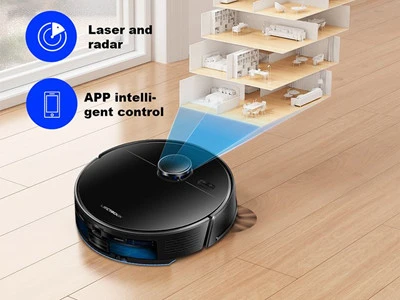
Path planning algorithms are key to cleaning efficiency. Basic models use a fixed "bow" or "grid" pattern path, while intelligent models use LiDAR or visual sensors to build a map of the glass surface, combined with SLAM (Simultaneous Localization and Mapping) technology to achieve dynamic path optimization, reducing repeated cleaning and missed areas.
Control and Power System: The main control board houses a microprocessor (such as an ARM architecture) responsible for coordinating the operation of various modules, processing sensor data, and executing user commands. Users can adjust cleaning modes, speeds, and cleaning areas via remote control, mobile app, or voice control. The power system includes a lithium battery and charging interface. Some models support automatic return to the charging dock. Battery life is typically 30-120 minutes, depending on battery capacity and cleaning intensity.