When choosing an automatic window cleaning machine, safety is the primary consideration. Prioritize continuous suction power parameters: at least 2500Pa for ordinary residential buildings, 3000Pa or higher for high-rise buildings, and ≥3500Pa for large glass areas or strong wind environments. It should also be equipped with power-off protection and a UPS backup battery. Additionally, choose products with a high-strength safety rope, such as a 150kg or 148kg mountaineering-grade safety rope. For manual magnetic window cleaners, choose products with a safety rope, and always secure the rope during use. The strong magnetic force can pose a risk of pinching fingers; maintain a safe distance between the two window cleaners during operation and use a magnetic shielding pad after use.
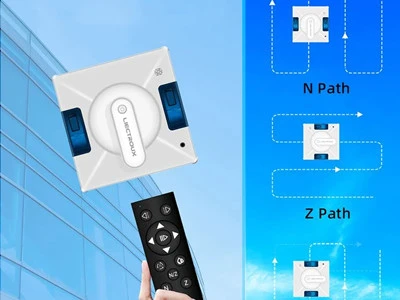
Regarding cleaning ability, pay attention to the water spray system. Multi-nozzle nano-atomization and six-nozzle nano-matrix atomization systems provide more even coverage. Cleaning structures such as dual-disc/dual-roller brushes and four-rotor robotic arms offer better cleaning results. For the cleaning cloth material, prioritize nanofiber cloths and NanoTex nano-hydrophobic fiber cloths. In terms of path planning, models with AI intelligent planning, laser navigation, and bow-shaped or spiral route planning are superior to those with random collisions, reducing missed areas and repeated wiping, resulting in higher cleaning coverage.
Compatibility requirements dictate choosing the appropriate magnetic force (manual model) or suction range (automatic model) based on your glass thickness. Note the product's compatibility with curved glass, narrow window frames (width less than 2cm may be limited), film-coated glass, and frosted glass. For manual magnetic models, select the corresponding specifications or adjustable magnetic force based on glass thickness (e.g., single-layer 3-8mm, double-layer insulated glass 15-23mm).
Regarding noise and user experience, choose models with lower operating noise, such as ≤60 decibels. Models equipped with brushless motors and silicone rollers offer better noise control. Consider lightweight design for easy installation, water tank capacity (100ml or more recommended for large homes), smart control (APP remote control, voice broadcast, etc.), and whether it supports convenient functions such as one-click cord rewind and one-click cloth replacement.
Other considerations include being wary of gimmicky "feature stacking" and focusing on core cleaning power and coverage of hard-to-reach areas. Avoid "low-priced, niche" brands, as their quality control may be poor. For automatic models, check if the brand has obtained authoritative certifications such as CE and FCC.