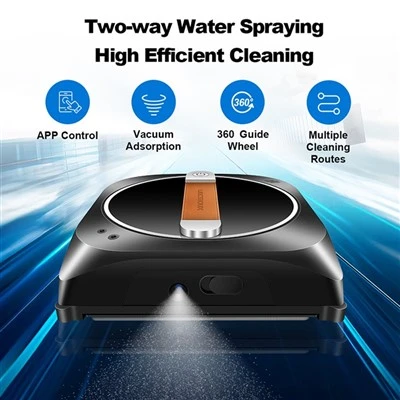

Navigation systems are the unsung heroes of glass cleaning robots. As a supplier in the dynamic market of robotic glass - cleaning solutions, I've seen firsthand how these systems can make or break a cleaning job. The question on everyone's mind: How accurate are they, really?
Let's start with the basics. A glass cleaning robot's navigation system is like its brain. It's responsible for mapping out the cleaning area, deciding the best path to take, and avoiding obstacles. And just like human brains, not all of them are created equal.
There are mainly two types of navigation technologies used in glass cleaning robots - sensor - based and mapping - based. Sensor - based navigation is like having a robot with a bunch of mini - detectives on board. These sensors, often infrared or ultrasonic, detect objects in the robot's path. When they sense an obstacle, the robot changes direction. It's a simple and effective way to avoid collisions, but it has its limitations.
In a real - world scenario, say a window has a decorative sticker on it. The sensor might mistake it for an obstacle and change the cleaning path. This can lead to uneven cleaning, as parts of the window might be missed. Also, sensor - based systems can struggle in environments with a lot of interference, like bright sunlight that can disrupt infrared sensors.
On the other hand, mapping - based navigation is a more high - tech approach. These robots use cameras or lasers to create a detailed map of the cleaning area before they start cleaning. Once they have the map, they can plan the most efficient cleaning route. It's like a GPS system for your windows.
We've tested out our Smart Window Cleaning Robot with this mapping technology, and the results have been pretty impressive. It can navigate around complex window shapes, including multi - pane windows and angled glass. It also ensures that every inch of the glass gets a good clean, because it knows exactly where it's been and where it still needs to go.
But mapping - based systems aren't perfect either. They can be a bit finicky when it comes to setup. If the initial mapping isn't done correctly, the robot might end up cleaning the same area twice or missing large parts of the window altogether. And new objects placed on the window during the cleaning process can throw the map off.
Now, let's talk about accuracy in terms of coverage. A top - notch navigation system should be able to cover the entire glass surface without leaving any spots uncleaned. Based on our in - house testing, our Glass Cleaning Robot models can achieve an average coverage rate of over 95%, and in some cases, even higher. That's because our engineers have worked hard to optimize both the sensor and mapping technologies.
Another aspect of accuracy is the ability to follow a straight line or a pre - determined pattern. Some of our customers have large, rectangular windows and prefer a systematic cleaning pattern. Our robots with advanced navigation systems can be set to clean in straight lines, ensuring that the cleaning is not only thorough but also aesthetically pleasing.
When it comes to avoiding obstacles, the accuracy of the navigation system is crucial. We've seen situations where other brands' robots get stuck on window frames, or worse, fall off the window because they couldn't accurately detect the edge. Our Electric Window Cleaner is equipped with a combination of edge sensors and high - precision obstacle - detection algorithms. This means it can safely navigate along the edges of the window and avoid any objects in its path.
In the commercial sector, accuracy becomes even more important. Office buildings have large windows with different types of glass, including tinted and reflective glass. Our Window Washing Robot has been designed to handle these challenges. Its navigation system can adjust to different light conditions and the unique properties of various glass types, ensuring consistent cleaning results.
We also receive feedback from residential customers who often have windows with curtains, blinds, or decorative elements. Our Automatic Window Cleaner can detect these soft and irregular objects and adjust its cleaning path accordingly.
But how do we measure the accuracy of our robots' navigation systems? We use a combination of real - world testing and computer simulations. In our test labs, we set up different window scenarios, including different sizes, shapes, and obstacle arrangements. Our robots are then run through multiple cleaning cycles, and we analyze the data to see how well they perform.
In addition to the technical aspects, we also focus on user - friendliness. Our goal is to make it easy for anyone to use our glass cleaning robots. That's why we've designed intuitive control panels that allow users to customize the cleaning path and settings. For example, if a user wants the robot to focus on a particular area of the window, they can simply draw a zone on the control app, and the robot will adjust its navigation accordingly.
So, to answer the question - how accurate are the navigation systems of glass cleaning robots? It depends on the technology used and the quality of the engineering. At our company, we're constantly researching and developing new ways to improve the accuracy of our robots. We believe that with the right combination of sensors, mapping technology, and user - friendly design, we can provide our customers with the most accurate and efficient glass cleaning robots on the market.
Whether you're a homeowner looking to make your window cleaning easier or a business owner in need of a reliable commercial cleaning solution, our glass cleaning robots are worth a look. If you're interested in learning more about our products or discussing a potential purchase, feel free to reach out. We're always happy to have a conversation and help you find the perfect glass cleaning robot for your needs.


References
- Industry research reports on robotic cleaning technologies
- In - house testing data from our glass cleaning robot development